

CAN XL enhances the CAN protocol at the data link layer by introducing new mechanisms that support additional communication models. As an evolutionary advancement of CAN CC and CAN FD, CAN XL allows existing CAN infrastructures to be selectively expanded to meet future demands while preserving their proven properties.
CAN XL – Key Technical Facts
- Payload up to 2048 bytes with clear separation of prioritization and addressing
- 11-bit Priority ID exclusively for CAN bus arbitration
- High, scalable payload throughput through classic CAN arbitration and significantly increased data rate in useful data transmission
- Advanced defect detection through cascaded CRC mechanisms
- Prepared for higher protocols and virtual networks through SDT and VCID concepts
Technical Background of CAN XL
CAN XL significantly broadens the application range of CAN technology beyond CAN CC and CAN FD. The decisive factor is not only the increased payload size, but also the combination of large payloads, separated arbitration and data phases, and a substantially higher effective data throughput.
CAN CC is limited to 8 bytes of payload with bit rates up to 1 Mbit/s, making it particularly well suited for small, time-critical control messages. CAN FD increases the payload to 64 bytes and typically supports data phase bit rates between 2 and 8 Mbit/s. This enables the transmission of moderate data volumes. However, protocol overhead still dominates when transferring larger data objects.
CAN XL fundamentally changes this relationship. With payloads of up to 2048 bytes, large data blocks can be transmitted in only a few frames. Arbitration intentionally remains at classic CAN bit rates of up to 1 Mbit/s, preserving deterministic bus behavior. Once arbitration is complete, data transmission proceeds at significantly higher bit rates. Practical implementations operate from several Mbit/s up to double-digit Mbit/s speeds, typically between 5 and 16 Mbit/s.
The key advantage is that effective payload efficiency increases substantially as payload size grows. As a result, CAN XL is particularly well suited for data-intensive communication while maintaining the proven strengths of CAN, such as deterministic arbitration and robust error handling. In this way, CAN XL bridges the gap between traditional CAN communication and Ethernet-based solutions.

CAN CC, CAN FD and CAN XL in technical comparison
- CAN CC with up to 8 bytes payload and bit rates up to 1 Mbit/s for time-critical control data
- CAN FD with up to 64 bytes payload and typical data rates of 2 to 8 Mbit/s for medium data volumes
- CAN XL with up to 2048 bytes payload and scalable data rates from several to double-digit Mbit/s for data-intensive applications
- Common principle with classical CAN arbitration and deterministic bus behavior
Benefits and applications of CAN XL
CAN XL is primarily driven by requirements from the automotive industry. The shift from domain-based to zonal vehicle architectures, along with the growing proportion of software in modern vehicles, demands scalable communication networks that provide higher data throughput and a clearly structured protocol design.
Within these architectures, CAN CC and CAN FD increasingly reach their functional limits – particularly when intended to serve as a backbone connecting zones or ECUs. However, the technical principles behind CAN XL are not confined to automotive applications. Industrial systems are also experiencing rising communication demands due to larger data volumes, distributed intelligence, and the parallel use of multiple protocols.
CAN XL enables the targeted expansion of existing network architectures in scenarios where Ethernet may offer high performance but is not always the optimal architectural or economic choice. One of the key advantages of CAN XL is its ability to combine high data transmission capacity with deterministic bus behavior. Time-critical communication via CAN CC or CAN FD can coexist with data-intensive CAN XL transmissions within a shared network environment. This allows existing infrastructures to remain in operation and be incrementally enhanced with CAN XL – without abandoning established and proven communication concepts.
Benefits of CAN XL in modern communication architectures
-
Driven by zonal and backbone-oriented architectures in the automotive sector
-
Efficient transmission of large diagnostic, service and update data with CAN XL
-
Combination of time-critical communication via CAN CC and CAN FD with data-intensive CAN XL services
-
Extension of existing architectures based on CAN CC and CAN FD without a complete change of technology
CAN XL at esd electronics
For esd electronics, CAN XL represents a natural continuation of a technology and product portfolio that has been successfully established over many years. For more than 35 years, esd has developed hardware and software solutions for CAN CC, CAN FD, and related communication architectures, supporting customers in the design, implementation, and long-term operation of CAN-based systems.
This extensive experience has given esd electronics a deep understanding of the CAN data link layer, its protocol mechanisms, and the specific requirements of industrial applications.
The company’s focus remains on long-term reliability, technical consistency, and seamless integration into existing system environments.
Within this context, CAN XL is regarded as a complementary enhancement – one that extends established technologies without replacing proven concepts.
CAN competence at esd electronics
-
Over 35 years of experience with CAN CC, CAN FD and CAN-based system architectures
-
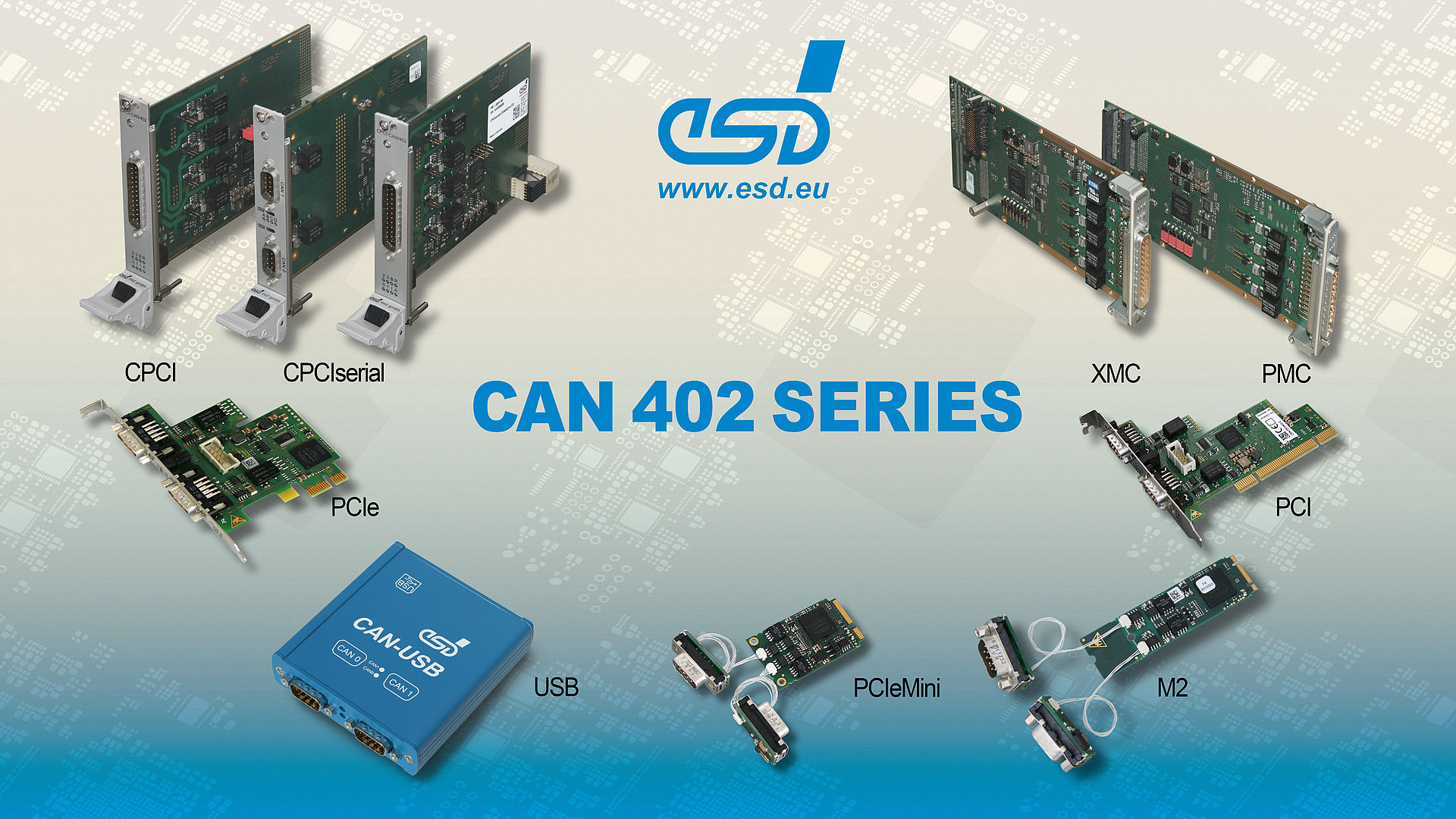
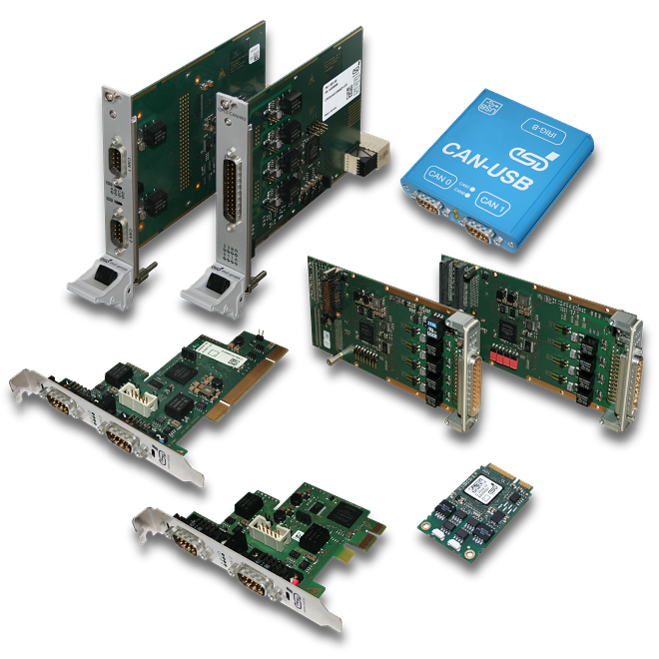
Broad product portfolio from PC interfaces to embedded solutions and gateways
-
Development of hardware, drivers and APIs from a single source
-
Continuous development of CAN technology in an industrial context
CAN XL Portfolio Outlook at esd electronics
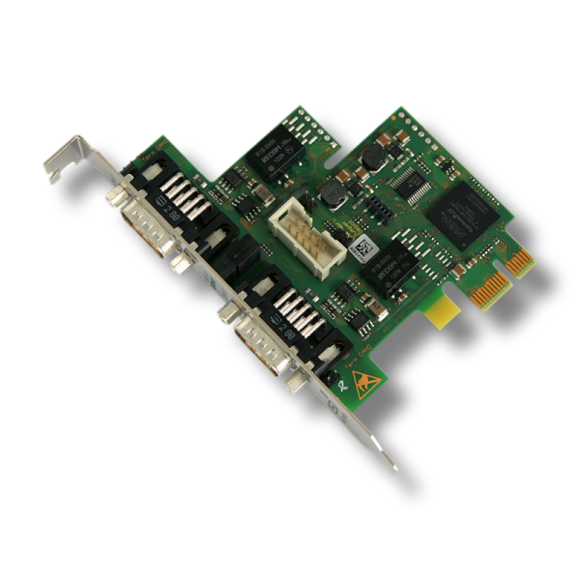
esd electronics intends to launch a CAN XL–capable PCIe interface card in 2026. Designed as an extension of the existing PCIe CAN portfolio, the new card will target development, testing, and evaluation applications supporting CAN CC, CAN FD, and CAN XL.
The established NTCAN API will be systematically enhanced to include CAN XL functionality, ensuring a consistent and uniform software interface across all CAN variants.
Further details will be released as product development progresses.


Feel free to sign up for our newsletter and stay up to date. Click here to register