SIL-compliant stage control with proven technology
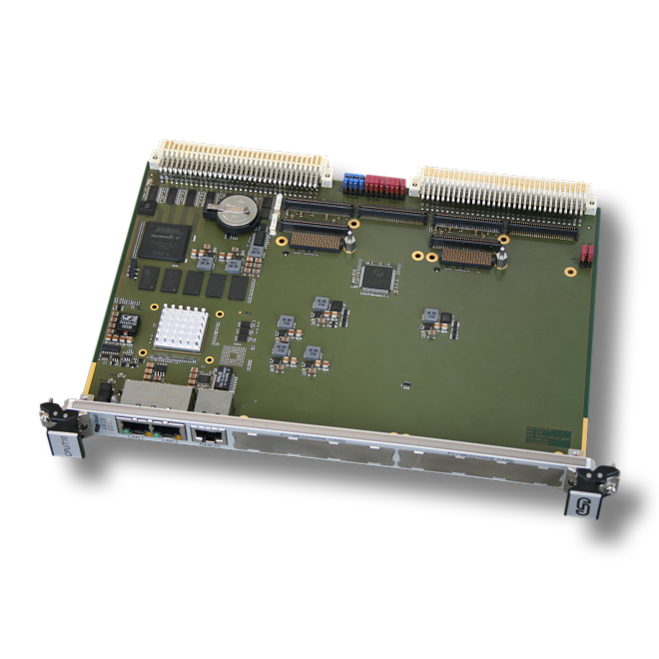
TTS essentially relies on tried and tested VMEbus technology by esd electronics
Stage equipment is constantly operated in close proximity to stagehands and performers, who must rely fully on the technology for their safety. Safety standards define the level of protection necessary to prevent harm, while also ensuring the systems remain practical and effective.
For over 40 years, Theatertechnische Systeme (TTS) from Syke has been designing and implementing stage systems. In collaboration with esd electronics, it developed a SIL (Safety Integrity Level)-compliant control concept in the late 1990s, based on VMEbus computers – a solution that remains state-of-the-art to this day.
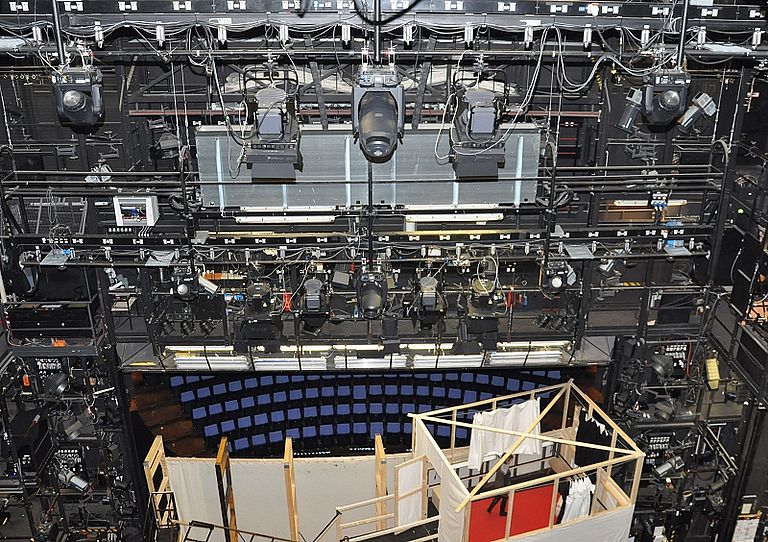
Spectacular performances featuring rapid scene and character changes, open set transitions, and striking special effects make SIL-compliant upper and lower stage control systems essential. Upper stage machinery includes bar and point hoists, portal units, fly lofts, rollers, work galleries, and movable gates and walls. Lower stage equipment comprises height-adjustable platforms, trap lifts, revolving stages, stage trolleys, and adaptable hall floors. Coordinating this wide array of equipment – often involving numerous drives operating in perfect synchronization – is a complex and demanding task.
For more than four decades TTS from Syke, Germany, has been equipping theatres and concert halls as well as event centres with the most advanced stage technology. The company’s spectrum covers a wide area ranging from single individual machines and installations to complete systems with upper and lower stage control machinery. Ole Sörensen, developer at TTS, explains: ”Since 1997 we have been developing electronic processor controls tested and approved by TÜV*, such as the TTS-EMS III with SERCOS and the TTS-EMS IV with EtherCAT. Both are certified to safety level SIL 3 according to IEC 61508”. He adds:” In this area we work closely with the Hanover-based system house esd electronics that has many years of experience in process control and in the development of VMEbus systems.”
* TÜV short for Technischer Überwachungsverein (Technical Inspection Association) are internationally active, independent service companies from Germany and Austria that test, inspect and certify technical systems, facilities and objects of all kinds in order to minimize hazards and prevent damages. (source: Wikipedia).
Proven Control Concept
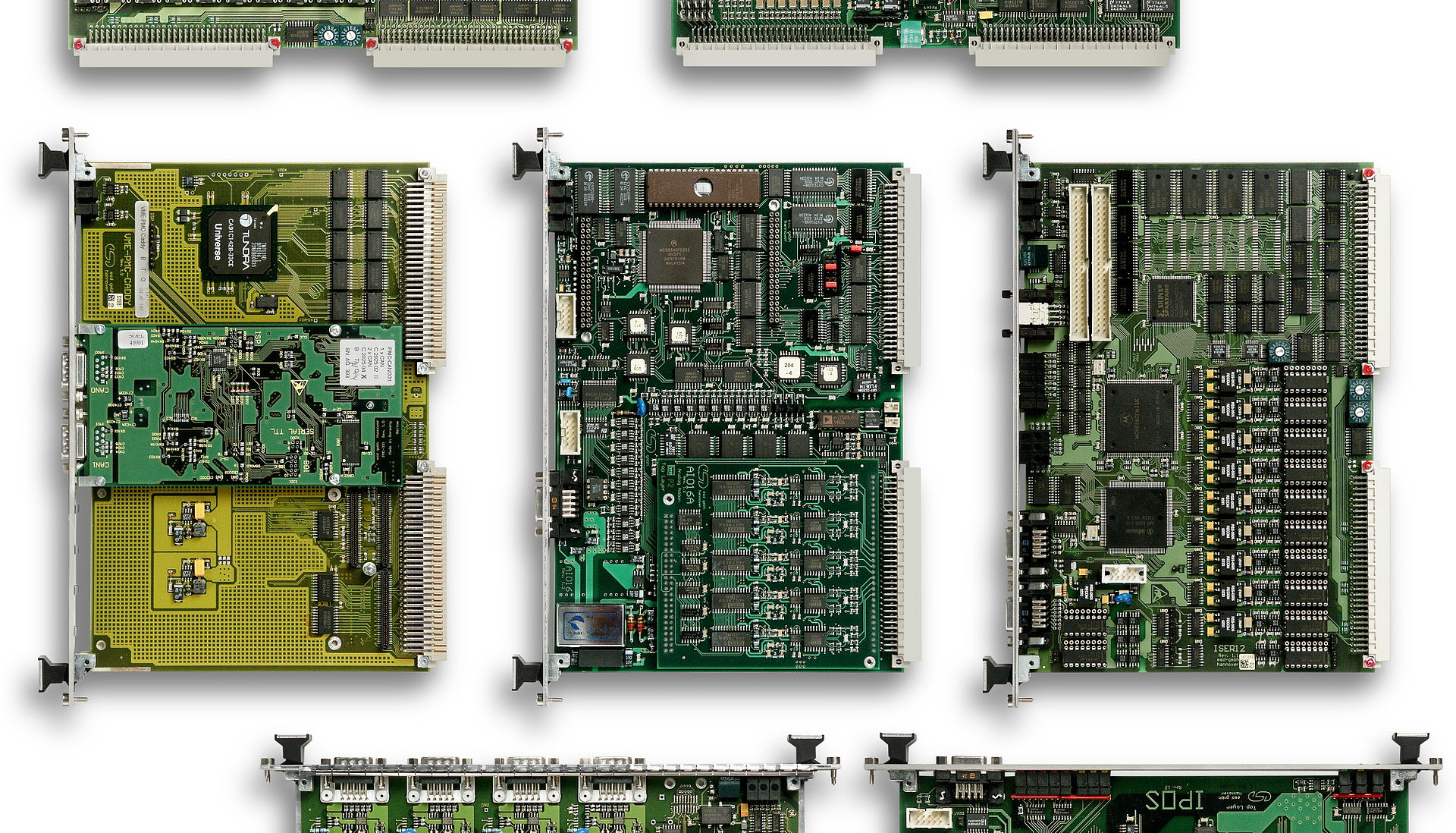
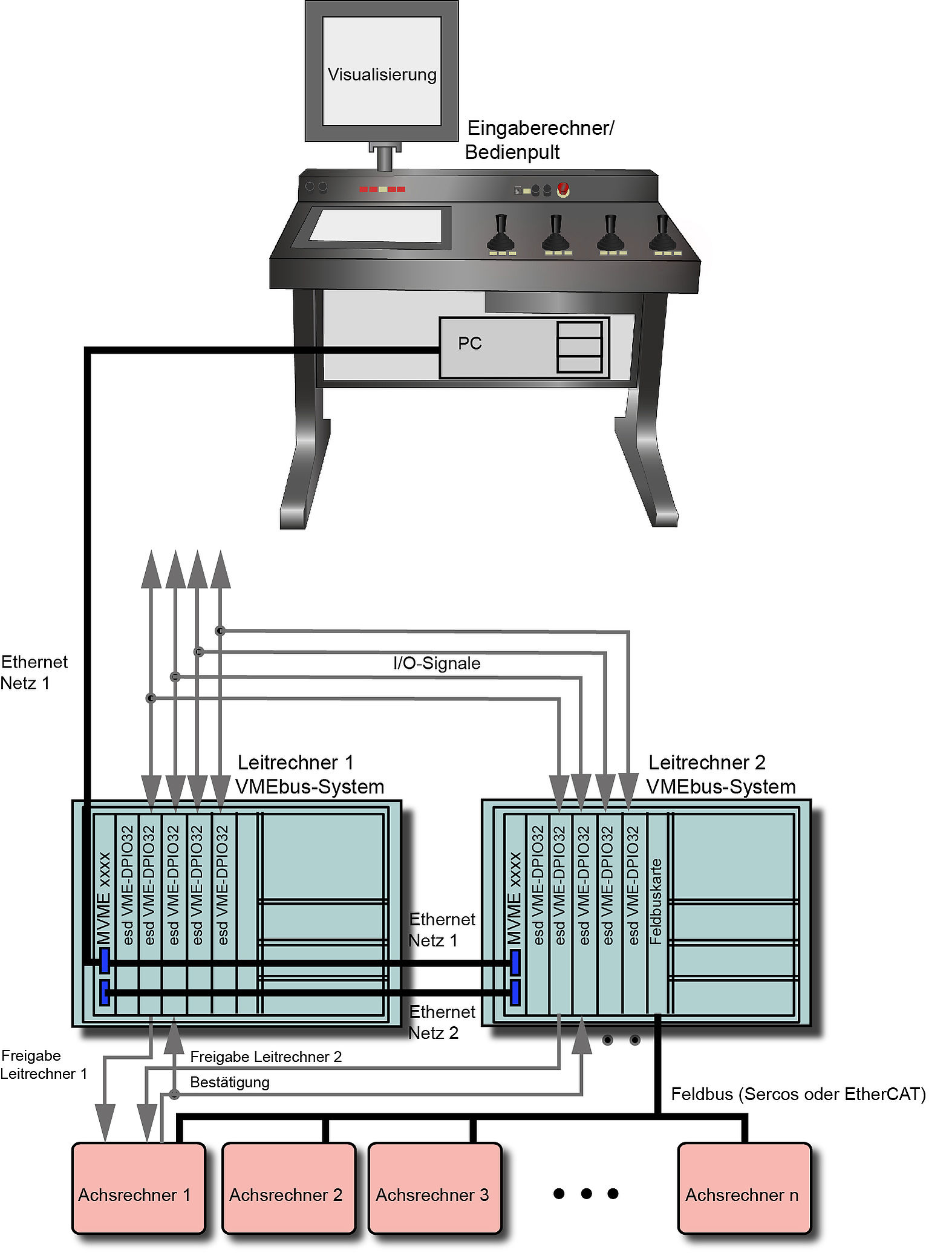
The control concept is based on a dual VMEbus master computer, working in conjunction with interconnected TTS axis computers that manage the drives. The VMEbus (Versa Module Eurocardbus) is a multi-user bus system which was developed for the Motorola processor family 68000 in the early eighties. A few years later the IEC standardized it by ANSI/IEEE 1014-1987.
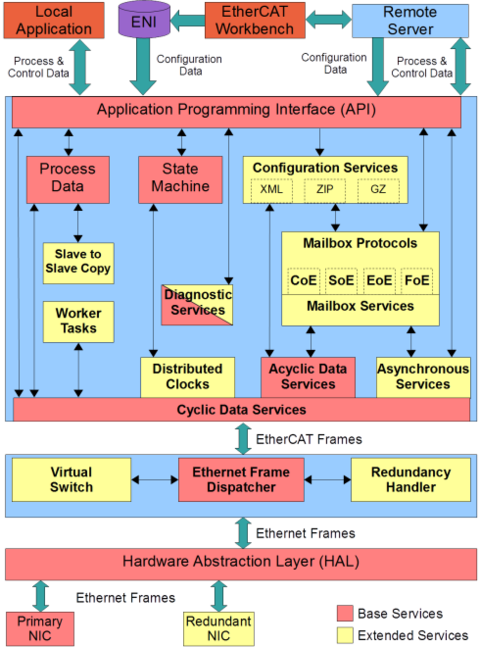
The VMEbus is often used in safety-relevant control systems and is certified, for example, for applications in aerospace. With this reference at hand, it seemed reasonable to use the VMEbus for theatre technology as well. Since the VMEbus uses modern processors such as the Intel x86 or the PowerPC esd electronics managed to develop CPU boards with a new, more powerful computer architecture. TTS employs these PowerPC-based CPU cards, equipped with Ethernet ports, in the master computers of its proven control system. Today, data exchange between the master computers occurs via Ethernet – replacing the previous CAN-based communication. The backend axis computers are connected directly to one master via signal lines and to the second master via a fieldbus. This setup ensures not only device redundancy but also cabling redundancy. The drive releases and confirmations are both received and issued by the two master computers. SERCOS as fieldbus in connection with fibre optic cables has proven successful, as in new systems EtherCAT combined with cat-5 cabling. The control of the safety functions is managed by a software from TTS specially developed for theatres.
Minimizing Risks through SIL
Because stagehands and performers often work beneath hoists and suspended loads, comprehensive safety measures are essential. Various regulations and standards outline the functional safety requirements for control systems. To minimize risk, the IEC 61508 and IEC 61511 standards establish the following fundamental principles:
• Risk definition and risk evaluation according to statistical probabilities of failure
• Determination and implementation of the
measures
• Use of approved equipment
• Periodic inspection of the required safety functions
Risks are defined in the risk graph according to IEC 61508/61511 with safety level SIL 3 for instance taking into account the following risk assessment: Severe and irreversible injury of one or of more persons or the death of one person (C2) in case of a frequent or continuous exposure (F2) and hardly possible hazard avoidance (P2) or the death of several persons (C3) in case of rare to frequent exposure (F1) and hardly possible hazard avoidance (P2). In both instances a relatively high probability of occurrence is assumed (W3). In total, SIL 3 contains 5 different assessments. These assessments compare with technical requirements that must be complied with. (risk graph)

In order to meet these requirements, the master and the axis control unit at the hardware level are both designed to be device and line redundant. Any additional safety requirement according to SIL 3 is integrated via a special TTS software into the computer control system. For example, moving the ceiling panel is always controlled by the input computers and the levers or pushbuttons connected to them. The input controllers are usually made up by industrial PCs connected to the redundant host computers via Ethernet. In addition, there is always a release signal from the control levers or the switches directed toward the host computer. The main computers transmit the movement command via a fieldbus to the axis control computer. They also receive release signals from the host computers and report their status both via the fieldbus as well as via direct connections to the main computer.
Ole Sörensen explains the concept as follows: “One of our main objectives during development was to implement all safety-relevant processes and queries at the control level consisting of axis and master computers and to realize this independent of the selected drive.“ For any drive to be controlled, whether it is a bar or point hoist, a stage pedestal, rotating platforms or stage trolleys, a separate axis control unit is used for each drive. Each of the two-channelled axis computers is designed for the positioning and monitoring of the driving axles assigned to it. The host computer controls the axles of the upper and lower machinery simultaneously, so that a podium with an attached hanging piece can be driven path-synchronously.
Real Life Examples
At the “Schauspielhaus Hannover,” two different performances are staged each day, along with the necessary rehearsals. Additionally, some shows run in blocks over several consecutive days. In such a dynamic environment, reliable and safe stage technology is absolutely essential. In 2004, the upper stage machinery at the “Schauspielhaus” was modernized, and the drive and control systems for the lower machinery were completely replaced. This upgrade was driven by two main factors: the need for additional hoists to enable more complex scene changes, and the lack of available spare parts for the aging stage control system.
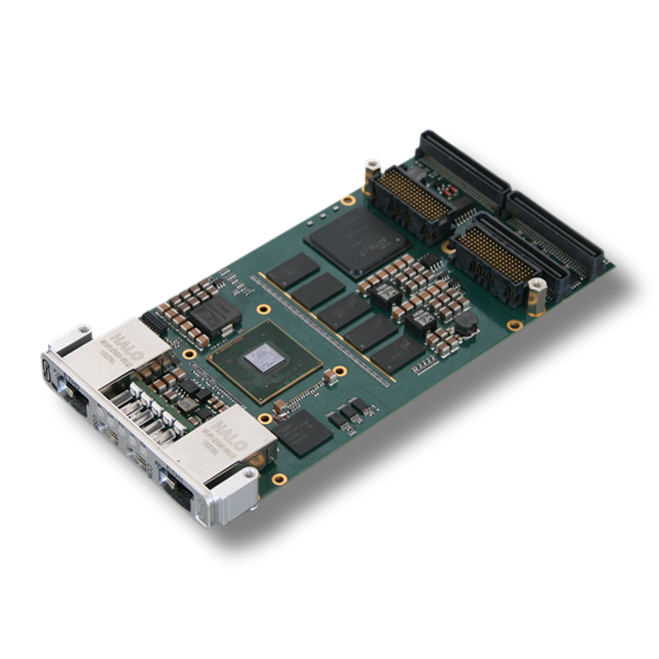
To address these needs, TTS proposed its SIL-compliant control system, TTS-EMS II, to the “Schauspielhaus.” This solution is based on the VMEbus computer board MVME 172 from esd electronics, which features a 68K CPU. Thanks to the modular design of the VMEbus system, individual components can be easily replaced, and the stage control system can be expanded at any time. The I/O cards—each featuring 32 digital process inputs and outputs – were designed and installed to meet the updated system requirements. These cards communicate with the axis units, which control a total of 76 drives. In the upper stage machinery, for example, there are 40 hoists with fixed rope drums, each capable of handling loads up to 500 kg at speeds of 1.5 m/s. Also noteworthy are the three lighting hoists, each supporting spotlights weighing 1.5 tonnes and operating at a speed of 0.6 m/s. The lower stage machinery includes drives for four stage platforms, each measuring 3 by 12 meters, with a lifting range of over 9 meters and a load capacity of 5 tonnes. In 2011, the control system was upgraded to TTS-EMS III, a transition that was seamlessly executed thanks to the system‘s modular design. The VMEbus computer card was replaced by the more powerful PowerPC CPU MVME 5100 by esd electronics. Dirk Scheibe from operations of the “Schauspielhaus” praises the TTS system “We are very pleased with the unit and its reliable operation. Whenever we plan any extensions or have any questions, we receive prompt support from TTS. This has not always been the case.”
Concept allows custom specific Operation
Since all safety-relevant processes and queries are carried out at the control level and independent of the selected drive, TTS can choose freely which operating system to use for the operator interface. Ole Sörensen says “In many areas we can adapt to our customers’ wishes and find solutions with our multi-touch user interface on the basis of Window 7.”
The control unit operates with one or more control panels. They can be either stationary, portable or even wireless managed via radio control. Entries are made primarily via touchscreen monitors. On the screens it is possible to switch between different displays for input and visualisation. Selection fields, topographically arranged for all controllable drives in the stage floor plan, allow a quick and clear selection of drives during daily rehearsals and set-up operations. The clearly structured drive table shows all assignments between control levers and drive axles together with the selected driving parameters. The current positions such as stroke range limits and target positions are displayed in bar diagrams for all drives axes.
Conclusion
In collaboration with esd electronics, TTS developed a SIL-compliant control system based on VMEbus computers and TTS’s own SIL-compliant software. The dual-master computer concept with built-in redundancy has proven reliable over decades and remains state-of-the-art today. As the VMEbus supports modern processors, esd electronics is able to create CPU modules with advanced computing architectures. The modular nature of the VMEbus system allows for easy exchange of CPU modules and adjustment of I/O cards to meet evolving requirements. A largely independent operating layer ensures flexibility, enabling customization to suit diverse customer needs. This approach delivers a future-proof system that balances both performance and ease of use.
Further Information for Download as PDF Document
-
 SIL-compliant stage control with proven technology Full technical article on "SIL-compliant Stage Control with proven Technology" (PDF) 2 MB