What issue did the customer face?
Within the launch infrastructure of the launch vehicle, numerous monitoring and sensor systems must exchange large volumes of data between the launch pad and the control room with near-instantaneous response times. The key challenge was the transmission of a cyclic process image of approximately 18 kB within a cycle time of less than 2 ms. Achieving this performance is demanding for conventional PC-based systems, as success depends not only on the real-time capabilities of the network but also on the rapid and deterministic delivery of data to the application layer.
The limiting factor was not a deficiency of the interface card itself, but rather the sheer communication volume involved. A process image of this size must be distributed across multiple EtherCAT frames. Consequently, the achievable cycle time is determined primarily by the amount of data to be transmitted per cycle.
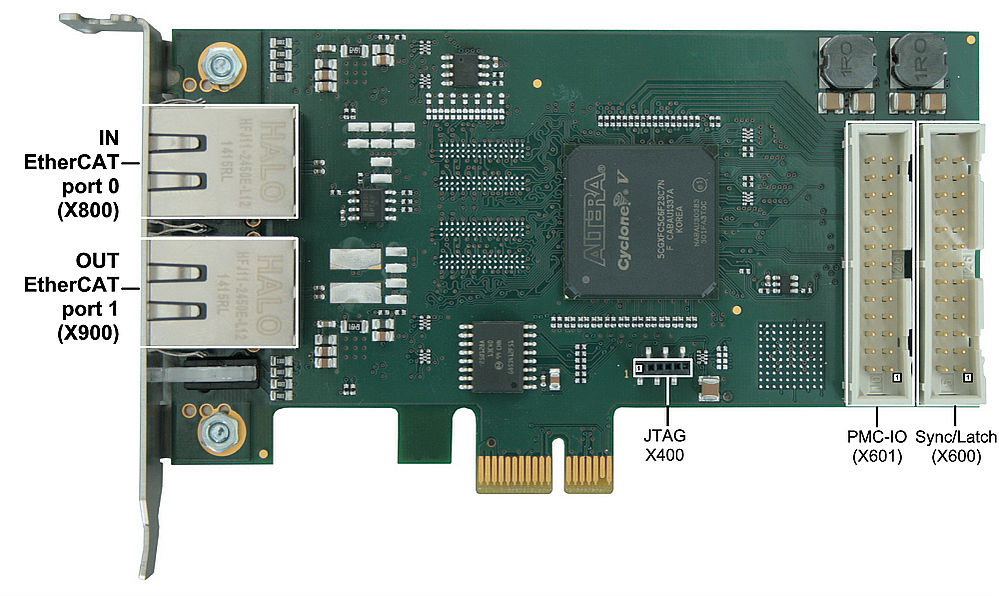
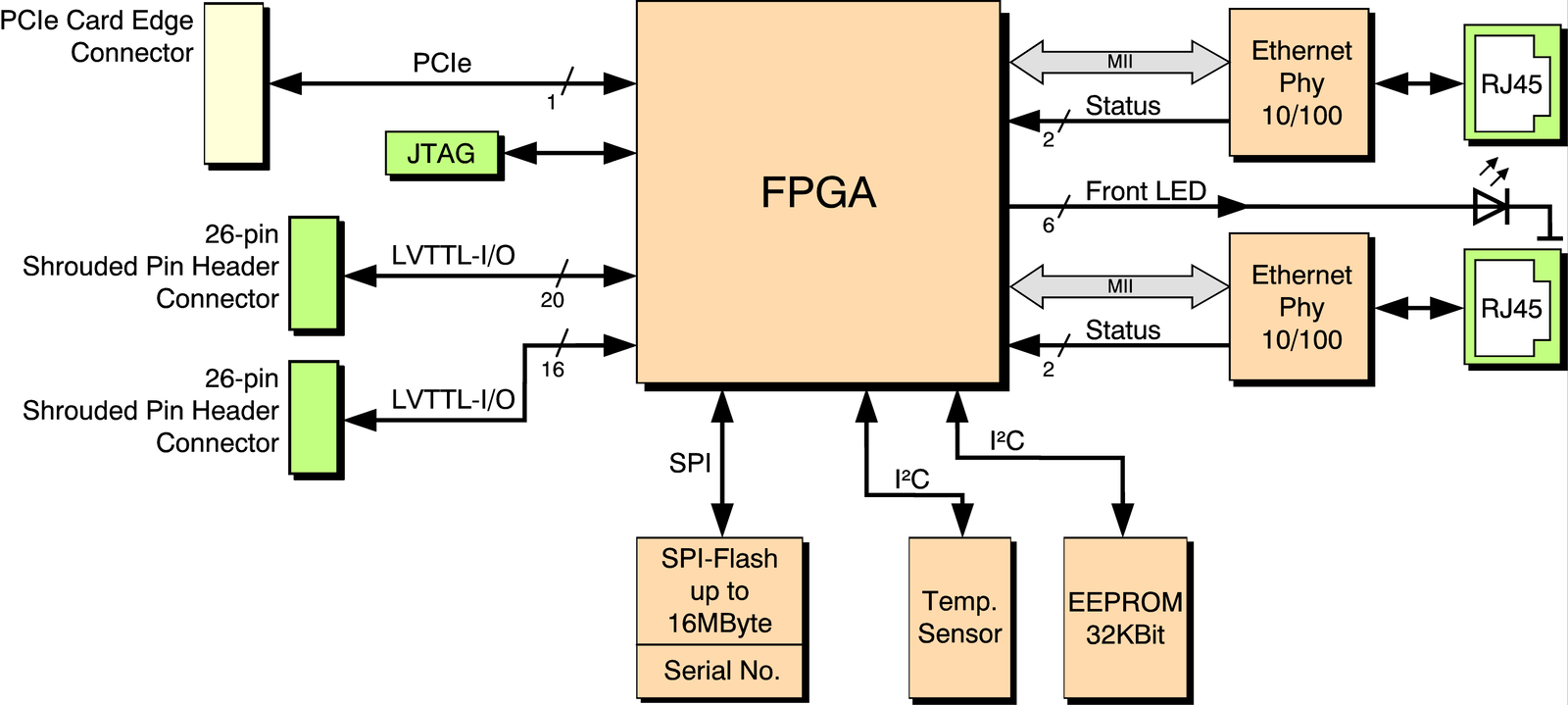
What does the solution look like?
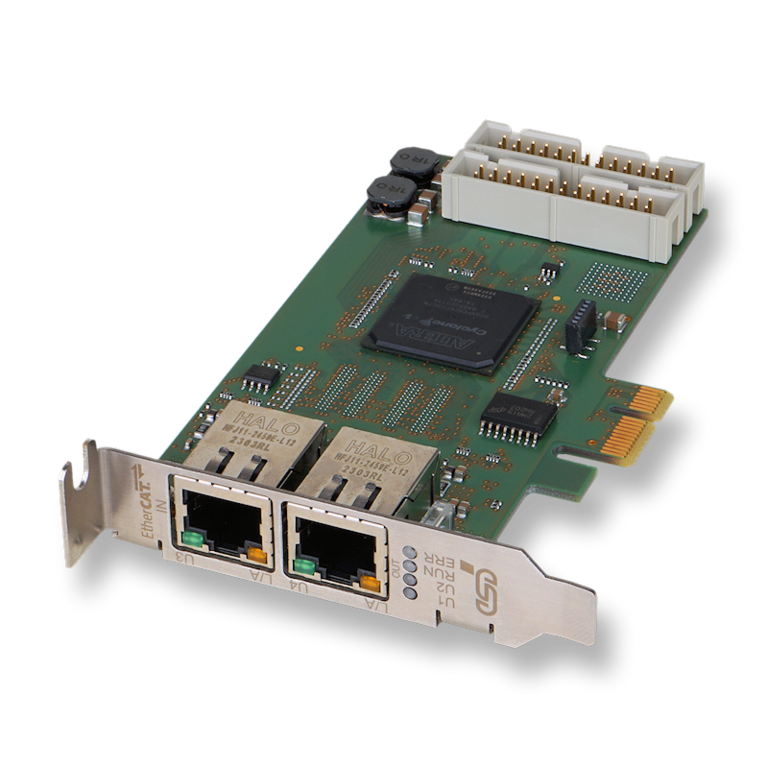
The ECS-PCIe/FPGA serves as the EtherCAT interface in the PC-based system, providing a direct connection between the host computer and the EtherCAT network. It is specifically designed to handle high cyclic data throughput. For data exchange, the card offers a 60 kB dual-port RAM (DPRAM), enabling large process images to be transferred reliably and efficiently between the EtherCAT network and the host application.
In addition, the ECS-PCIe/FPGA supports DMA-based data transfers, allowing larger data blocks to be moved to the application with minimal CPU involvement. This significantly reduces processing overhead on the host system while ensuring that process data is made available quickly and deterministically for analysis and further processing. As a result, even with a process image size of approximately 18 kB, cycle times of less than 2 ms were successfully achieved.
How does this solution benefit the customer?
The customer receives a solution with which large amounts of time-critical sensor data can be transmitted reliably and reproducibly. The short cycle time improves the up-to-dateness of the status data from the launch infrastructure and thus supports a rapid assessment of safety-relevant situations.
At the same time, the PC application is relieved because the data does not have to be transferred with unnecessary copying effort or high CPU load. This simplifies integration into existing systems and creates a reserve for further processing tasks in the application.
From the customer's point of view, the central benefit is therefore not only pure real-time communication, but the combination of a large process image, short cycle time and efficient integration into a host application. This makes the solution suitable for demanding monitoring and control tasks with high data volumes.